A public-information view of Parkinson's disease in Switzerland
Switzerland is a useful case study because public sources already describe a dense support network, specialised movement-disorder care in Lausanne and Geneva, and active research funding with visible university-hospital links.
The section below keeps the tone simple: key figures, visible care pathways, research landmarks, and direct links back to the public sources used.
Three visible poles in the public Swiss landscape
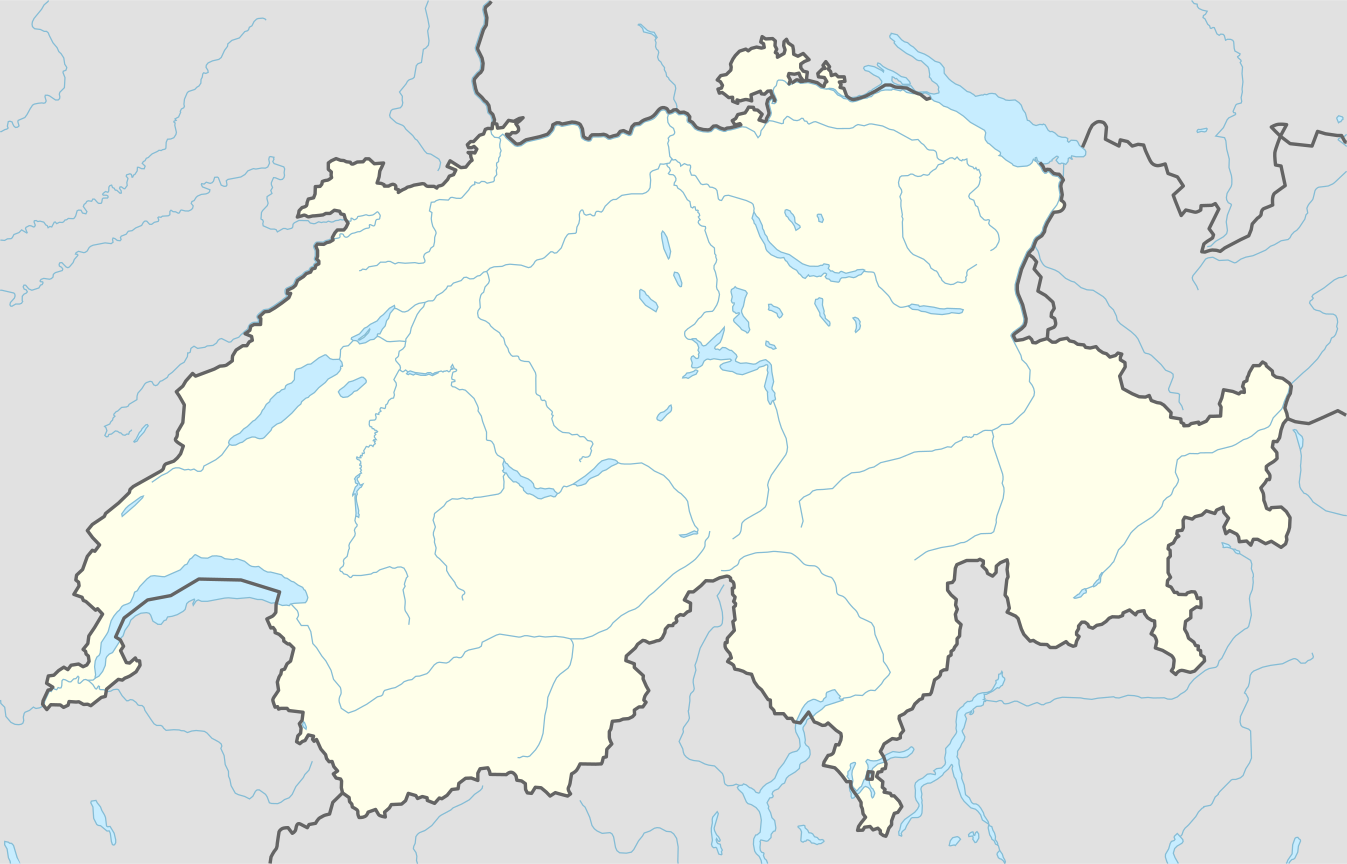
Map base: TUBS / Wikimedia Commons, CC BY-SA 3.0.
What public Swiss sources already make visible
- A national patient association with a long-running telephone line, regional offices, and a broad self-help network.
- Specialised hospital pathways at HUG and CHUV for diagnosis, medication management, advanced therapies, and therapeutic education.
- A research ecosystem that spans epidemiology, biomarkers, neuromodulation, and translational neuroscience.
This page is informational only. It does not replace advice from a neurologist or specialist movement-disorder team.
Public Swiss numbers
Public Swiss material repeatedly points to a burden of roughly fifteen thousand people living with Parkinson's disease. The federal scoping report also summarised rising national burden indicators between 1990 and 2016, including higher deaths, prevalence, and disability-adjusted life years.
The same scoping report cites Geneva data as the first Swiss population-based epidemiological study, with an age-adjusted incidence close to 20 cases per 100,000 people per year.
Visible care pathways in Geneva and Lausanne
At HUG, the movement-disorder unit explicitly covers Parkinson's disease and other parkinsonian syndromes, and the nursing consultation is designed to support medication use, side effects, daily life, and caregiver coordination.
At CHUV, the abnormal-movement consultation is presented as the entry point for diagnostic review, medication optimisation, pumps, and deep brain stimulation discussions.
Patient-led and hospital-linked research capacity
Parkinson Schweiz reports that it has funded Swiss Parkinson research since 1989, with up to CHF 400,000 allocated annually and millions already invested over time.
Public hospital and university material in Romandy also highlights advanced therapies, therapeutic education, and movement-disorder collaboration across HUG and CHUV.
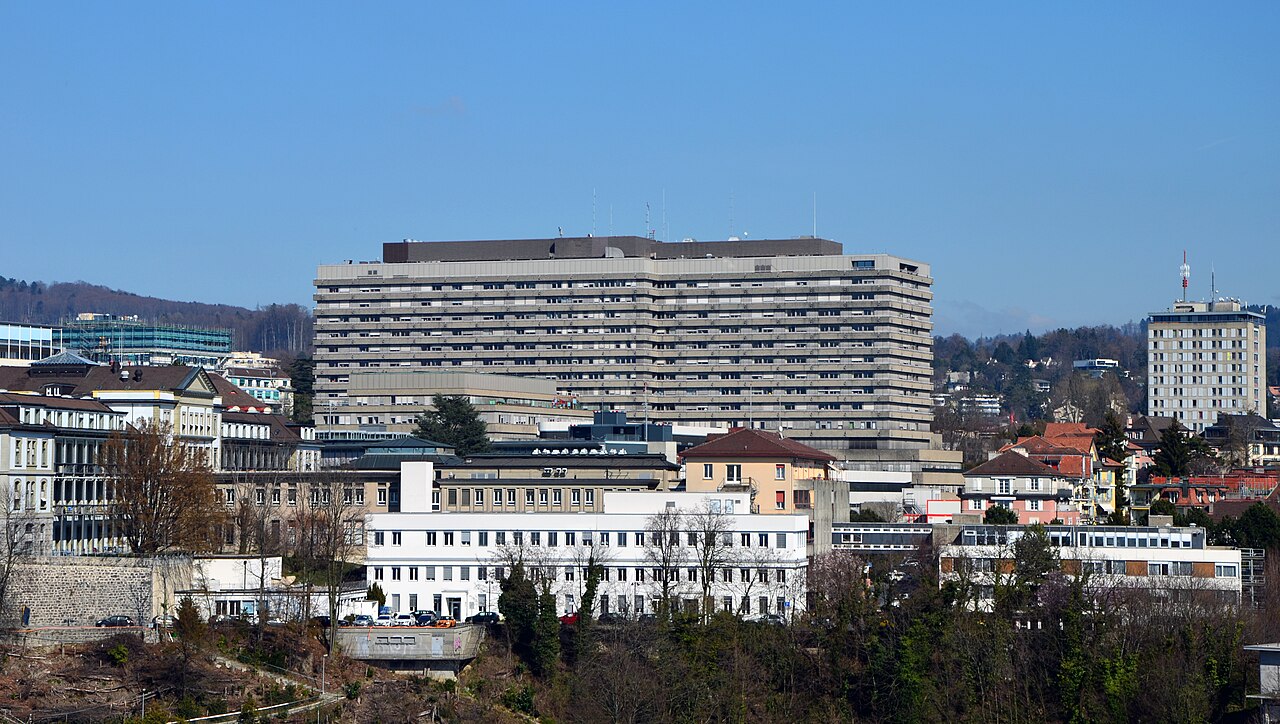
Lausanne: CHUV as a visible movement-disorder hub
For the public-facing Swiss landscape, Lausanne matters because CHUV publishes a dedicated abnormal-movement consultation and appears alongside HUG in regional neurology programming on advanced therapies.
Image: "CHUV vu de la cathedrale" by Rama, CC BY-SA 2.0 fr / Wikimedia Commons.
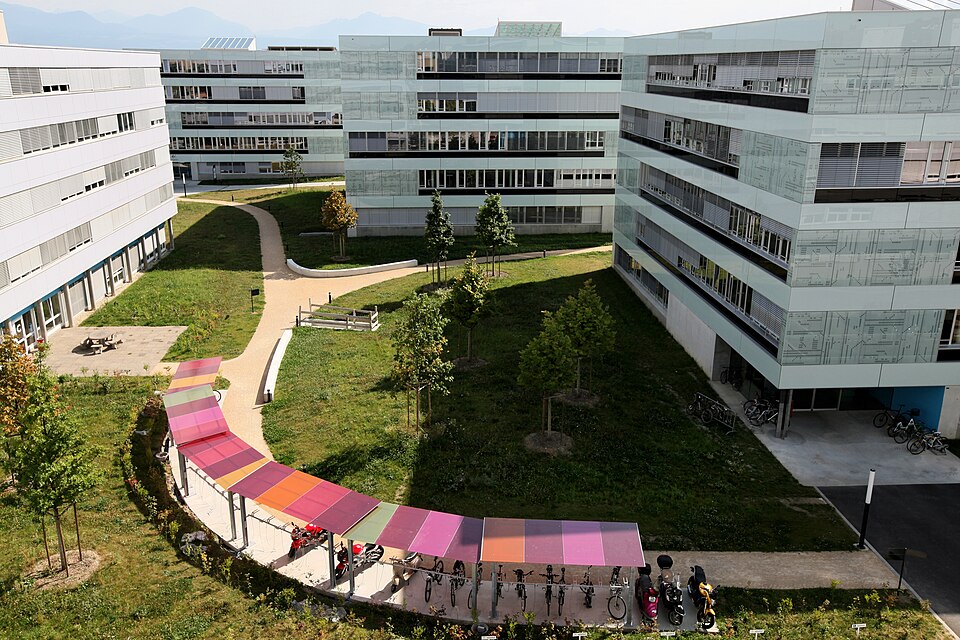
Lausanne area: a broader neurotechnology corridor
Even when public pages focus on care, the Lausanne region also signals the proximity of a wider neurotechnology environment around CHUV, UNIL, and EPFL, which helps explain why it remains central in Swiss Parkinson innovation.
Image: "EPFLinnovationpark" by Alexandre Roux, CC BY-SA 3.0 / Wikimedia Commons.
Main public sources used for this Switzerland section
- Parkinson Schweiz annual report 2024 for members, Parkinfon, regional structure, and support-network context.
- Parkinson Schweiz research funding page for the annual research-call scale and the long-run funding history since 1989.
- HUG Parkinson consultation and HUG nursing consultation for Parkinson's disease for Geneva care pathways.
- CHUV abnormal-movement consultation for the Lausanne movement-disorder pathway and advanced-therapy access.
- Federal ARAMIS/BAG scoping report for Swiss burden indicators and the summary of Geneva population-based epidemiology.
- PubMed: descriptive epidemiology of parkinsonism in the Canton of Geneva for the underlying population-based study.
Where to look next on this site
This section keeps the project’s longer-form material organised into a clear route through the rebuilt site.
Why this project exists
Read the principles behind the site and the case for participant-led research.
Read philosophyPDMeasure workflow
Use the local rebuilt surveys and tests as a lightweight exploration environment.
Open PDMeasureEngland prevalence maps
Explore the epidemiology write-up and image set in a redesigned layout.
Open study page