Epidemiology
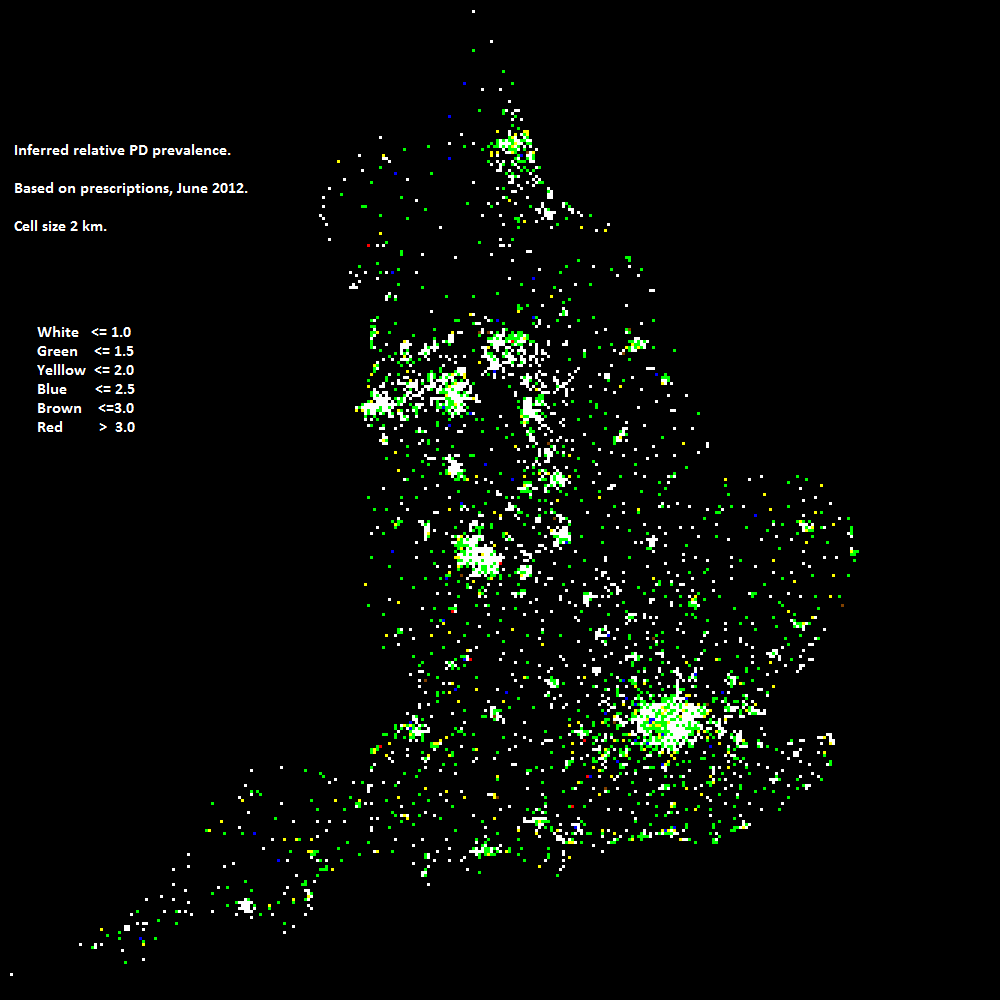
Inferred relative Parkinson's prevalence in England
This page condenses the original long-form write-up into a more readable overview while keeping the main map outputs visible.
Method in one paragraph
The original study used public prescription and practice-location data to estimate relative Parkinson's prevalence by geography. Prescription activity was treated as a proxy rather than a direct case count, so the result is exploratory and directional rather than definitive.
Why it matters
Even imperfect spatial signals can help point toward places where demographics, service access, prescribing patterns, or environmental factors deserve a closer look.
Caveats
- Prescription counts are only a proxy.
- Local prescribing habits can distort the signal.
- Patient residence and surgery location may differ.
- Age structure and case mix are not directly controlled.
National view
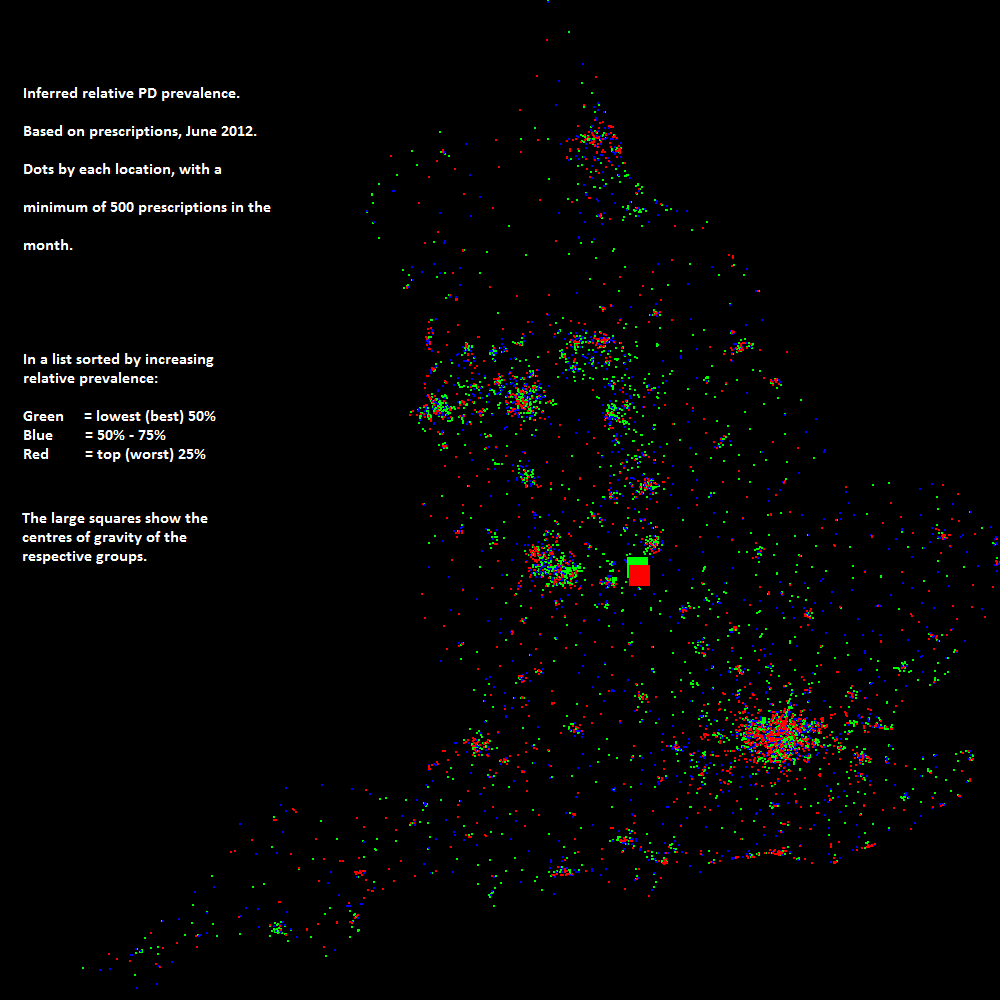
Lower / higher prevalence split
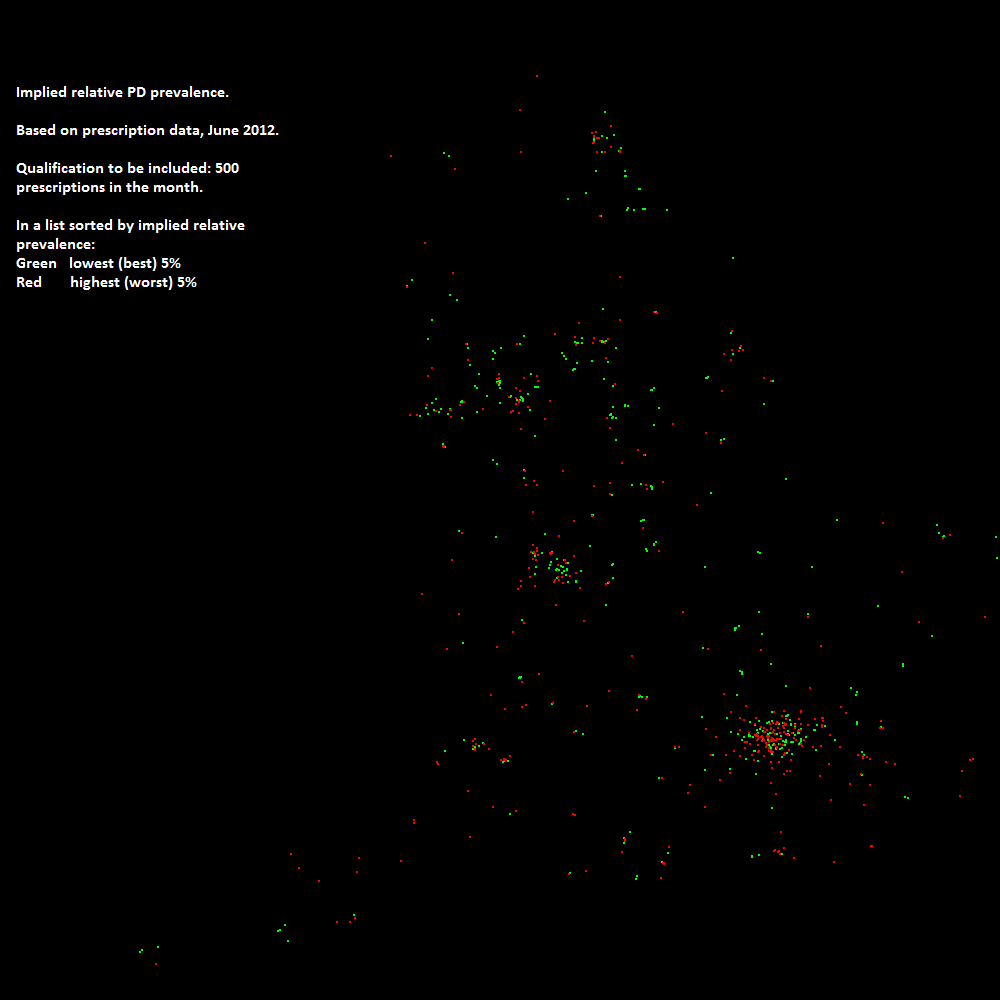
10 km aggregation
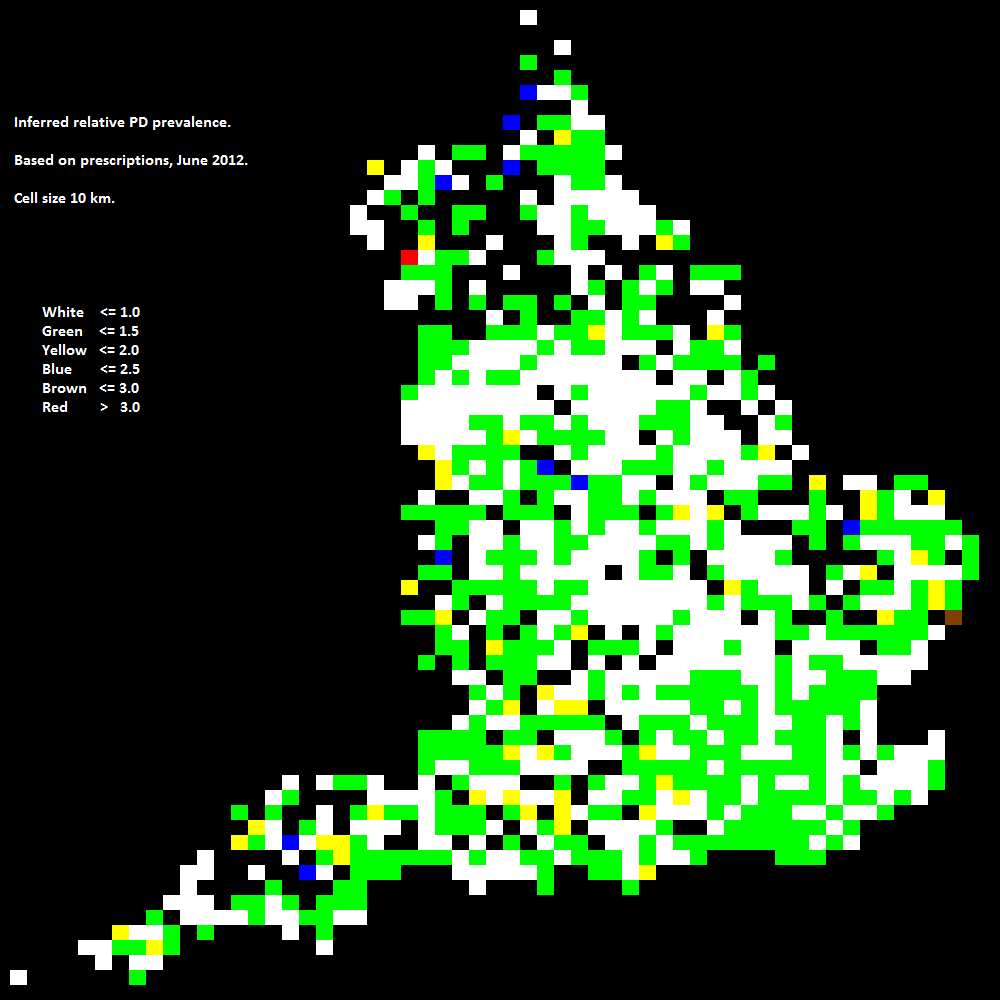
5 km aggregation
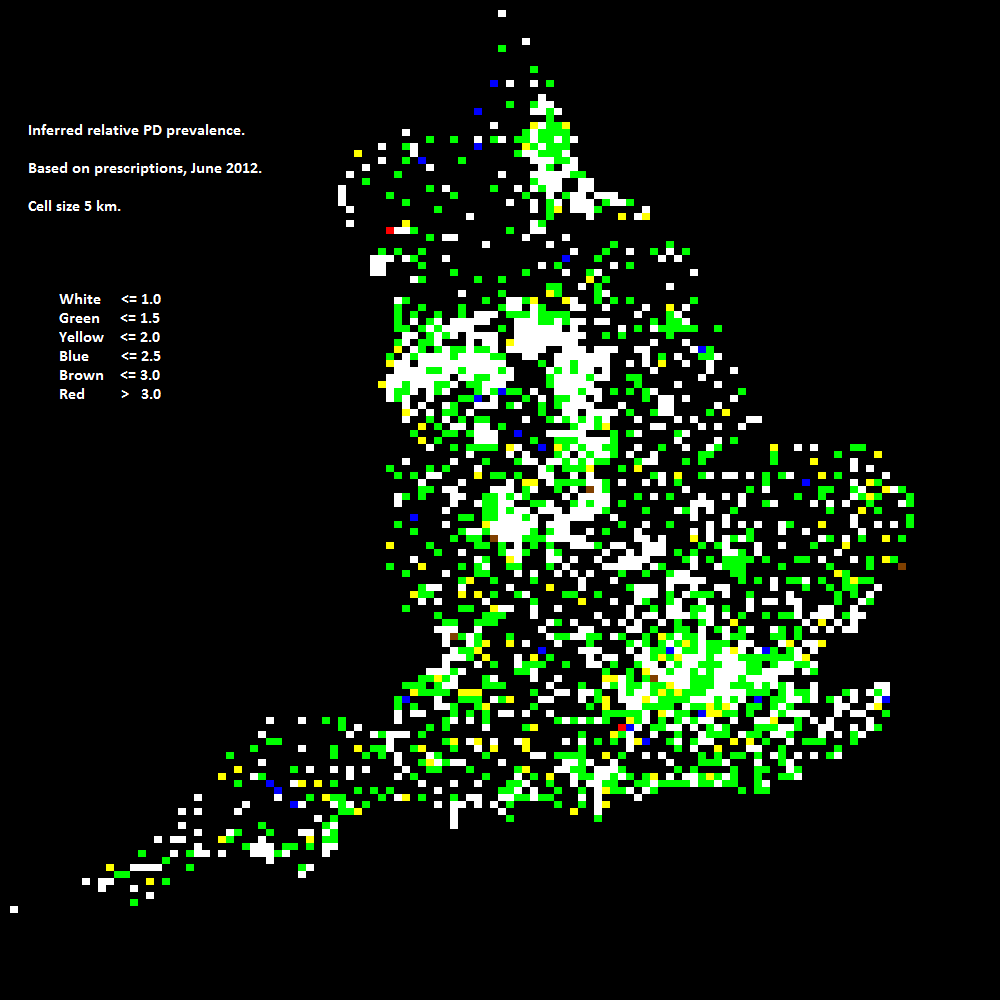
2 km aggregation